The Consequence Of Shape
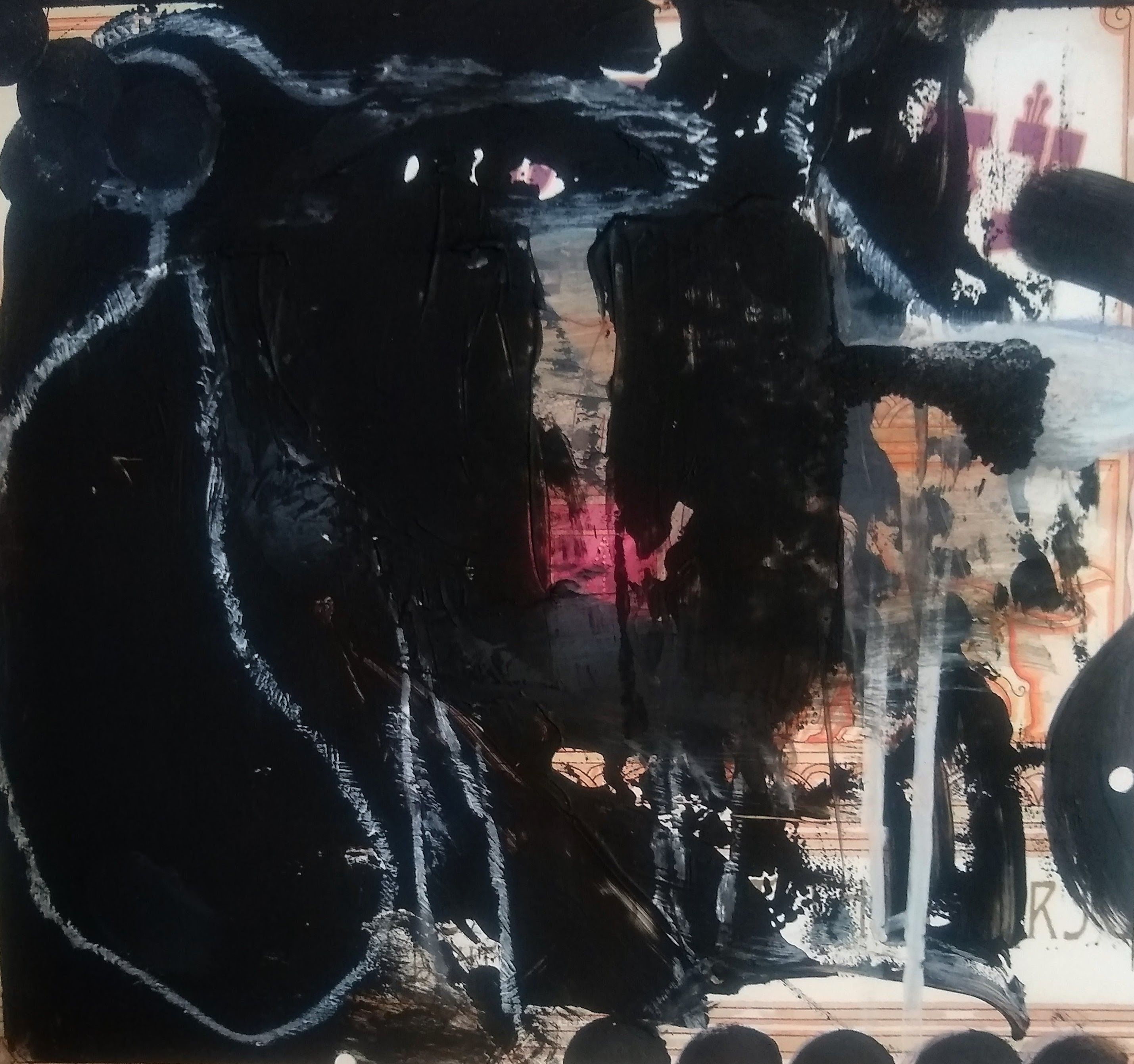
The Consequence of Shape
I found I could say things with color and shapes that I couldn’t say any other way – things I had no words for.
Georgia O’Keeffe
The fascination for shapes calls forth certain invariant traits of the human psyche and gives insights into attitudes toward artistic creation. The Greeks and Romans transferred the geometries of shape in nature to their buildings and mathematically derived the construction from their calculations. In his dialogue Timaeus, Plato (428 BCE-348 BCE) bridges abstract Forms (perfect archetypes) with the physical universe by assigning them specific geometric shapes (“Platonic solids”.) Ovid (43 BC- AD 17), one of the most famous and influential Roman poets, wisely asserted: “There is nothing constant in the universe. All ebb and flow, and every shape that’s born, bears in its womb the seeds of change.” The geometry of Cezanne (1839-1906), the French Post-Impressionist painter reduced the natural world to a distinct concept-set: the fundamental paradigm or foundational model defined by the cylinder, sphere, and cone. Three of the seven basic geometric forms that also include the point (a zero-dimension object representing location in space), line, plane, and circle. Each with its own unique properties and applications. The Bauhaus, a revolutionary German art and design school (1919-1933) founded by Walter Gropius (1883-1969), pioneered the integration of fine arts with functional mass production. Its minimalist, geometric-shaped aesthetic was as much a philosophy (“form follows function”) as it was a rejection of “fine art”. It placed the basic square, circle, and triangle into the grammar of modernity.
In the ancient practice of feng shui (“wind-water”), its earliest foundations in Neolithic China roughly 3500 to 6000 years ago, shapes were placed in order to encourage energy flow. Shapes used to represent the Five Elements (Wood, Fire, Earth, Metal, Water) that govern specific qualities of life and energy balance in space. However, it is with the Japanese Zen monk-artist Sengai Gibbon (1750-1837) we turn. In his famous painting Circle, Triangle, and Square he paints the three fundamental shapes in the universe. According to R.H. Blyth (see frontispiece in Zen and Zen Classics, Vol. 4, 1966) the “Circle” represents “finite infinity, “timeful timelessness”; the “Triangle” the fixed, unalterable Natural Law, perfect in the Galaxy”; and the “Square” the “human and vulnerable” depicted by the house, castle, city, and state. As each can be inscribed within and circumscribed without each other, we are reminded of the ancient occult and alchemistic symbols they call to mind as well as the three major sects of Japanese Buddhism: Shingon, Tendai, and Zen. However, let us not forget it is also “a kind of creation story” as Blyth metaphysically ventures. The movement from formlessness to form and the multitudinous of things. But it is a quote from Picasso (1881-1973) we can take back to the studio: “The artist is a receptacle for emotions that come from all over the place: from the sky, from the earth, from a scrap of paper, from a passing shape (italics mine), from a spider’s web.”
Shape is often the first visual prompt, signal, or hint that triggers a specific action of response when looking at a work of art. The human brain loves shapes in general, and symmetry in particular. Symmetry enables us to understand shape or form more quickly. It is also of the familiarity in nature. Regularity is pleasing and comforting as abrupt changes in direction or shape are more seen as disruptive. In this silent language, shapes (and forms) influence perception and appeal to human empathy. Organic versus geometric shapes, natural versus “mechanical” have their effect (outcome, consequence) as well as affect (influence, impact).
Shapes have cultural and gender associations. In Western culture, curves are traditionally associated with femininity, while angularity leans masculine. In some cultures, triangular shapes are viewed as symbols of danger, hierarchy and power. An elementary shape like a square is processed quickly by the brain and may trigger an immediate emotional reaction (“Rothko effect”) based on its innate quality.
A stimulus pattern is perceived in shapes, that of parsimony and orderliness. Parsimony being the minimalistic shape used in a given representation; orderliness being the straightforward way of organizing these shapes. A “shape psychology” that serves as a subconscious signal vis-à-vis perception. The subconscious will associate different geometries with specific meanings and moods. Soft shapes like circles or curves are associated with safety, unity, and comfort. Curved shapes or spaces the brain’s reward centers, prompting relaxation and positive social interactions. Squares and rectangles symbolize structure and logic. They convey stability but can risk rigidity if overused. The triangle, known as the shape of motion and direction, command attention and direct the eye to other shapes. They unconsciously incite awareness or urgency.
Marketers leverage these subconscious clues extensively. Neuroscience reveals different geometric shapes activate specific brain regions like the amygdala, responsible for processing feelings such as fear and pleasure, and distinctly sharp as opposed to smooth shapes. Types of shapes produce different impressions and expressive characteristics. Behavior in the presence of shapes takes on not only a variety of new permutations, but also exaggerated, more widespread manifestations. We distinguish images, for example, with strong emotional content from emotionally neutral ones. There have been many theories suggesting a link between human affective responses and the low-level features in images apart from the semantic content. Of course, individuals may not have the same response to a given image making the representation of shapes in complex images highly challenging, if not difficult.
Consequences of shape are profound, fundamentally altering artwork in how it is perceived by both artist and audience. Potentially firing specific neurological and behavioral responses, how we experience the work and the world-at-large. Shapes dictate how images move through the composition. They establish hierarchies of importance, size and weight (a spherical shape is subjectively perceived as heavier than a cube), or oppositions like drag or immovability. They can also be streamlined for efficiency or speed.
How shapes command our attention and intuitive actions can actuate heartrate as well as creative output. There is a growing literature base investigating the psychological and neurophysiological impact of geometrical properties of architectural spaces: the effects of curved and rectangular spaces on the body and mind, the positive and negative affect. Architects and designers use these findings to inform decisions and promote neuroarchitecture that enhances positive experiences and productivity.
How do we define shape? Is shape different from form? There are lots of overlaps. Let’s begin simple by saying shape is the visual form, outline, or external boundary of an image (object). Distinct from properties like color or texture, shapes are the fundamental structures of everything around us and are primarily categorized into types. Geometric shapes are precise shapes that follow specific rules, whereas two-dimensional, flat shapes have only length and height as in circles, squares, and triangles. Three-dimensional forms have length, width, and depth as in spheres and cubes. Irregular, asymmetrical shapes, or freeform, organic shapes frequently are found in nature including those like puddles, rocks, leaves and clouds. Have we not been a multitude of shapes before we assumed a consistent form?
Gestalt comes into comparison when it denotes the disposition or arrangement that give a particular aspect or appearance to the shape. It is a graphical representation of an image or object, its surface or outline. In geometry, shape excludes position, size, orientation, and chirality (the overlapping mirror version) and can be compared and contrasted by congruence, similarity, deformation, etc. Human vision has been theorized that it breaks down shapes into geons. That is, the recognition by components coined by the psychologist and vision scientist Irving Biederman (1939-2022) who specialized in the way the brain processes underlying quick responses and interpretations of what it perceives. How we recognize complex objects into basic building blocks are decomposed into features or dimensions that describe the way they vary, like segmentation, compactness, and spikiness. The shape’s contour, whether hard-edge, sharp-angled or curved influences the attitude toward the image.
In art, shape is a two-dimensional area that is recognized and defined by its outline and plotted as a flat icon. “Shape” from the Greek schema or morph (“form”) is the outer appearance that reflects the essential inner nature of the image or object. Shape carries a strong implication of a mass or a body depicted in its “bulk” or “area” as well as its lines. Connected with eidos (“which is seen”), it is the ideal archetype or metaphysical essence. Forma in Latin is broadly translated as form, shape, and appearance. In metaphysics, it is the structure or essence of a thing as contrasted with its matter.
Plato’s theory of Forms is a realistic ontology of universals. An essence or archetypal form common to everything that makes anything what it is (as in an apple is an apple because it participates in the Form of Apple). Ideal, unchanging, timeless, and perfect existing in a world of its own, infinite but realizable through anamnesis or “recollection”. (Aristotle denies its separate existence although he grudgingly recognizes a similarity with the Platonic view.) Immanuel Kant (d.1804), German philosopher and central figure of the Enlightenment, saw form as a priori (the “first thing”), an aspect of experience with “matter” which has no meaning until mind imposes some configuration, structure or arrangement upon it.
The primary difference between shape and form is that shapes are flat and enclosed by lines (two-dimensional). Tactile and voluminous forms take up physical space or creates the optical illusion of doing so. Largely because of their being assigned various denotations in philosophy and aesthetics and because of their frequent use in literature, poetry, music and arrangement of content as perceived by the senses, form implies, like shape, internal structure, boundary lines, and unity to the whole.
Shape, like form, is a self-enclosed Presence. In the radiance of its projection, it can become the single act of understanding the artwork. A work of Presence rather than as an object. A mirror through which the artist beholds meaning as an act of seeing that participates in revelation. Illumination that incarnates and transfigures what we think we know into luminous correspondence. The seeing “rightly” as an ethics of vision. Not what I can paint but what does my painting reveal. Not to abandon vigor or critical reflection but the necessary shift in orientation that continues to unveil. Shapes and forms, images and composition, brush work and color, all the physical, emotional, and spiritual work that goes into making a painting comes down to the one thing: the witness of one’s being rather than the aesthetics of control. Studio practice ceases to be a technical discipline concerned with conceptual clarifications but a discipline of vision.
Shapes shift toward a domain where revelation, symbol, and metaphor of meaning converge in an unfolding through sustained attention and contemplation. Interpretation of shape or form becomes an ascent that can only be approached and encountered when participation replaces distance, humility replaces process-managing. Where understanding begins and conceptual certainty ends, the task is not to exhaust meaning but to reopen resonance. We work through the layers that the painting presents. We engage with its history, our history, its sources, our sources, and its transformation into a new hybrid discourse. A new form of trans-discursive knowledge, a specifically aesthetic knowledge, that emerges from working through both material and directness of illusion.
Charles Baudelaire (1821-1867), French poet, essayist, and art critic: “If an assemblage of trees, mountains, water, and houses, such as we call a landscape, is beautiful, it is not so of itself, but through me, through my own grace and favor, through the idea or the feeling which I attach to it.” (The Salon of 1859, Letters to the editor of the Revue Francaise.) A good painter for Baudelaire must master technique but must also have unlimited imagination. Not what is simply seen but what is felt and dreamed. A tension that exists between controlled technical mastery and magical value. To get to those layers that are out of sight, to the trajectories of one’s assertions and to gain an appreciation for the certainty of recognition that stands in contrast to the uncertainty that persists throughout the process of painting. To integrate images that reflect on this action thereby thematizing the acts of seeing, remembering, and knowing. It becomes clear that there is more to a distinguishable image that resists comprehension, eludes visualization, and escapes immediate connections.
The German language novelist, playwright, memoirist, and author of nonfiction, Elias Canetti (1905-1994), writes, “Here I am, trying to give an account of something, and as soon as I pause I realize that I have not yet said anything at all. A marvelously luminous, viscid substance is left behind in me, defying words.”
As painting strangely grounds yet defies language and thought and is not always fully understood, we must gradually find its translation in us. To relinquish outmoded identities and defenses and to radically reimagine larger possibilities. A new perspective in rounding out an awareness of vision. The poetic summary that underscores the importance of incorporating depth experience of the imagination available to all of us.
Comments